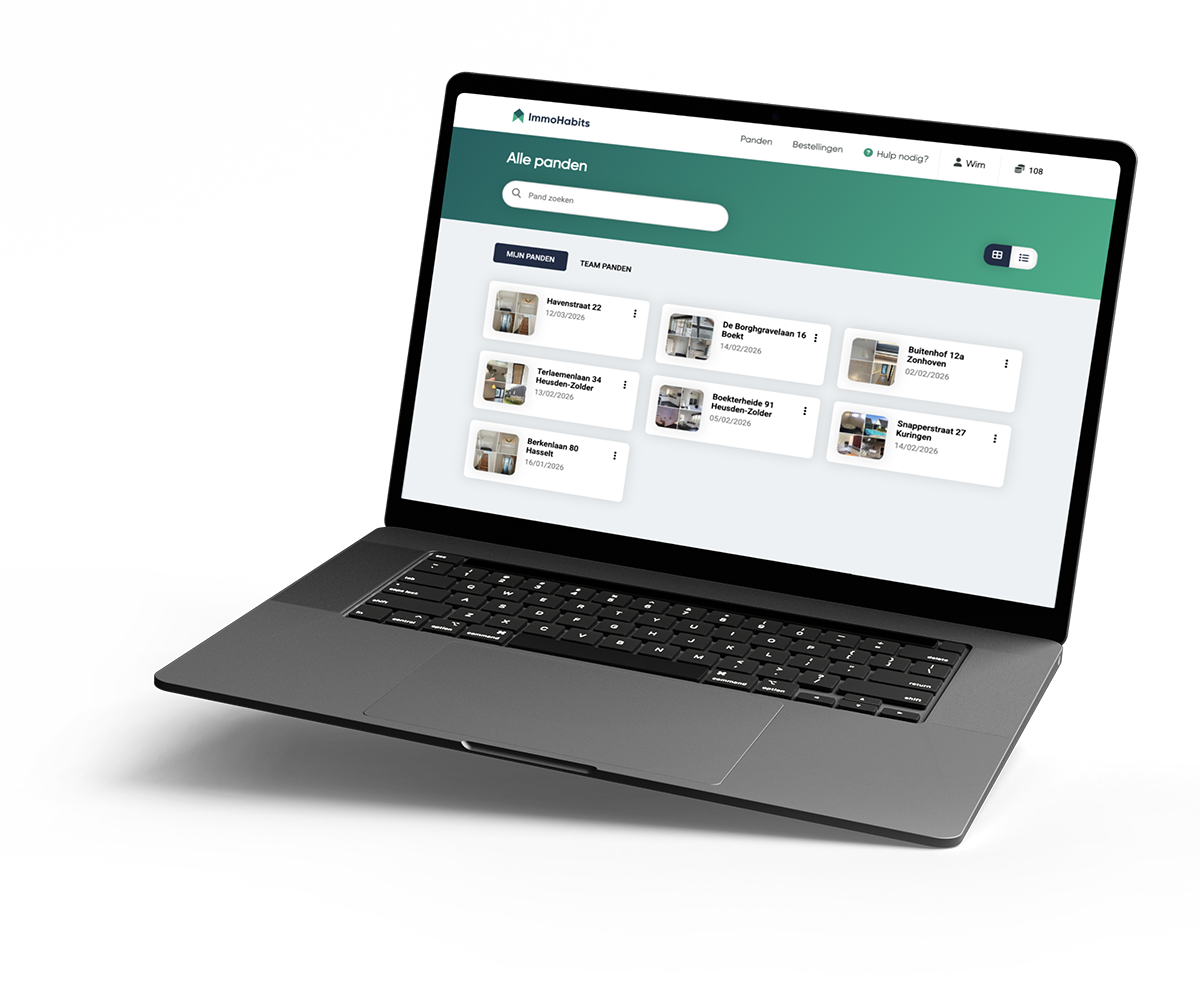
Create your own report in 2 minutes?
Take photos, AI writes the report. Your first test report is free.


An inspection report must be "detailed": it describes, room by room, the state of floors, walls, ceilings, windows, doors and appliances, including any existing damage and defects. It also records the meter readings, the number of keys handed over, the date and the signatures of both parties. Photos are not legally required, but in practice they are the strongest form of proof.
Belgian law requires a "detailed" inspection report (art. 1730 of the old Civil Code and the regional lease rules). A general phrase such as "the property is in good condition" has no evidential value: in a dispute, nobody can tell from it whether that scratch in the parquet was already there at move-in. The more precise the document, the smaller the room for discussion at move-out.
Walk through every room and describe at least:
Do not forget the outdoor spaces: terrace, garden, storage room, garage and any common areas that belong to the rented property.
Besides the description of the rooms, the report records practical facts:
The meter readings serve a double purpose: they are part of the property's state and you need them for the energy suppliers anyway.
Photos are not legally required, but they are by far the strongest evidence. A description like "10 cm scratch in the parquet, left of the door" becomes much more powerful with a dated photo next to it. Photograph systematically: every wall, every floor, every appliance and every existing defect in detail. With ImmoHabits the photos are even the starting point: the AI derives the room-by-room description from them and references the matching photos in the report.
How many photos should an inspection report contain?
There is no legal minimum. Rule of thumb: every wall, floor, ceiling and appliance at least once, plus a detail photo of every existing defect. For an average apartment you quickly reach 50 to 150 photos.
Does every room need its own description?
Yes. "Detailed" means room by room. Storage rooms, garages, terraces and gardens that are part of the rented property belong in it too.
Are meter readings mandatory in the report?
They are not a legal validity requirement, but they are standard practice: they fix the consumption starting point and prevent discussions with energy suppliers.
Is there a mandatory template?
No. The law sets the substantive requirements (detailed, adversarial, dated and signed), not the format. A structured room-by-room report with photos qualifies.
Take photos, AI writes the report. Your first test report is free.